
🔥Hot Games
View All














Advertisement
Sorry Bob
Sorry Bob drops you into the shaky shoes of Nigel Burke, a surgeon whose fingers have zero coordination. Each operation is a tug-of-war between clumsy physics and a ticking health bar, where grabbing a scalpel feels like defusing a bomb and every slip draws real consequences from your patient.
What Is Sorry Bob?
Sorry Bob is an indie surgery simulation built around intentionally awkward physics. You play as Nigel Burke, a self-proclaimed doctor whose left hand is the only tool between life and death for your patient, Bob. The game presents a first-person view of the operating table where each finger moves independently, turning even the simplest grip into a coordination puzzle. Operations range from heart transplants to brain swaps, each with a clear objective that sounds straightforward until the physics kick in. Your surgical kit skips the sterile instruments entirely, handing you sledgehammers, chainsaws, pizza cutters, and screwdrivers instead. Every tool behaves unpredictably, so forcing a grip or moving too fast sends organs flying and blood levels plummeting. Later stages push the absurdity further with alien patients in outer space, where gravity shifts add another layer of chaos to an already unsteady hand.
Strategy Guide: Surviving the Operating Room
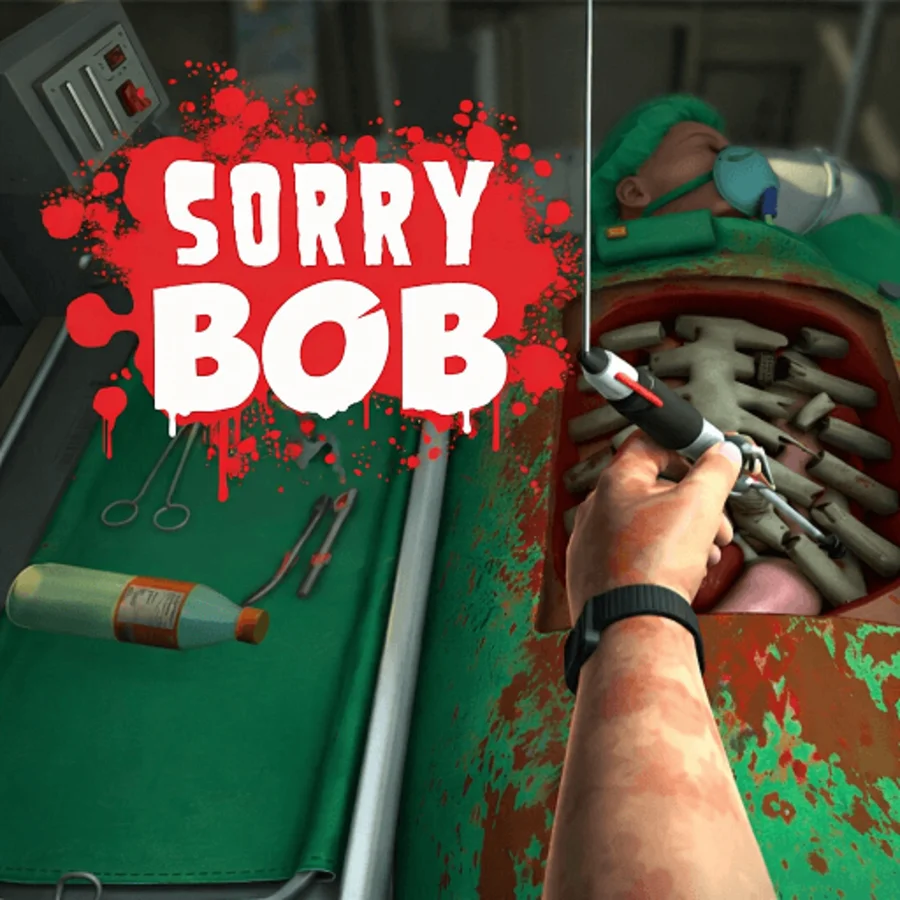
Every surgery in Sorry Bob starts the moment you understand the objective screen. Read it carefully before touching any tool, because each operation has a specific organ to remove and replace, and grabbing the wrong instrument wastes precious seconds.
From our testing across 15+ operations, the single biggest killer is rushing the grip. Open your fingers wide, lower the hand slowly over the tool, then close one finger at a time. Pinching too fast flings instruments across the table and damages Bob in the process. Practice this deliberate grab on the first heart transplant until it feels natural.
Keep syringes within reach at all times. Blood loss accelerates whenever you nick tissue or drop a heavy tool onto Bob, and a quick injection buys enough time to regroup. After stabilizing, clear removed organs from the chest cavity immediately; clutter blocks your view and leads to accidental cuts on exposed tissue.
Match your tool to the task. The saw cuts through ribs efficiently but devastates soft tissue, while the scalpel handles precise cuts without collateral damage. Heavier tools like the sledgehammer should only appear when bone or hard casing needs breaking. Using the wrong tool doubles blood loss and halves your margin for error.
In later alien stages, gravity shifts tilt the entire table. Anchor your hand near the center before each shift, then reposition once the new angle settles. Trying to operate mid-tilt almost always sends tools sliding off the edge.
Sorry Bob Highlights
Individual Finger Physics
Each finger on the surgeon hand moves independently, so gripping a scalpel requires coordinating all five digits against unpredictable physics that punish rushed movements.
Unconventional Surgical Kit
Forget sterile instruments. Your toolkit includes sledgehammers, chainsaws, pizza cutters, and screwdrivers that behave more like demolition gear than medical equipment.
Escalating Transplant Operations
Progress from heart transplants through kidney and brain swaps, each adding tighter time limits and more fragile patient conditions that demand cleaner technique.
Real-Time Health Management
Bob bleeds whenever you cause injuries, and his blood level drops continuously during mistakes. Syringes stabilize him, but only careful tool handling prevents the spiral.
Alien Space Operations
Later stages move the operating room to outer space where gravity shifts tilt the table mid-surgery, adding positional chaos to an already unsteady hand.
Sorry Bob FAQ
Why do the fingers move separately instead of gripping together?
Individual finger physics is the core challenge. Each digit responds independently, forcing you to coordinate a deliberate grip rather than relying on a single button press.
How do I stop Bob from bleeding out during surgery?
Keep syringes nearby and inject whenever blood drops below half. Minimize collateral damage by matching the right tool to each task and avoiding fast, jerky hand movements.
Which tool should I use for each operation type?
Scalpels handle precise cuts on soft tissue, saws break through ribs and bone, and the sledgehammer cracks hard casings. Using the wrong tool doubles blood loss, so read the objective before grabbing anything.
Why should I clear removed organs from the chest cavity?
Leftover organs block your view of the operating area. Clutter leads to accidental cuts on exposed tissue, which accelerates blood loss faster than hesitation does.
What changes in the outer space operations?
Gravity shifts tilt the entire operating table mid-surgery. Tools slide, organs drift, and your hand positioning needs constant adjustment to compensate for the changing angle.