
🔥Hot Games
View All









Advertisement
Slicer Duo
Slicer Duo turns one-button knife movement into a rhythm problem. Each tap or hold changes altitude, every obstacle punishes hesitation, and the reward loop keeps dangling coins, bonus rooms, and new blades just beyond your next clean run.
What Is Slicer Duo?
Slicer Duo is a knife-based reaction game built around altitude control, timing, and visual pattern reading. Instead of swiping across targets like a traditional fruit cutter, you guide a flying blade through stage layouts packed with fruit, debris, spikes, anvils, and swinging hammers. The mechanic is simple enough to understand immediately, but the stage design keeps turning that simplicity into a test of rhythm. Every rise and fall affects your angle, your next slice, and whether the blade stays alive long enough to reach the finish. The references describe a structure with hundreds of levels, changing themes such as Spring, Ice, and Desert, and a reward sequence at the end of each stage where accurate throws can unlock large multipliers. There is also a bonus room filled with extra coins if you hit the right target, which gives the game a stronger arcade loop than a pure survival challenge. Coins feed back into blade unlocks, so success has a visible progression track instead of ending with a single score number. What really separates Slicer Duo from other lightweight arcade titles is the local two-player mode. Sharing the same screen changes the mood from meditative slicing to competitive chaos, because both players are reacting to the same hazard language and trying not to make the run-ending mistake first.
Strategy Guide: Keep the Blade Alive Longer
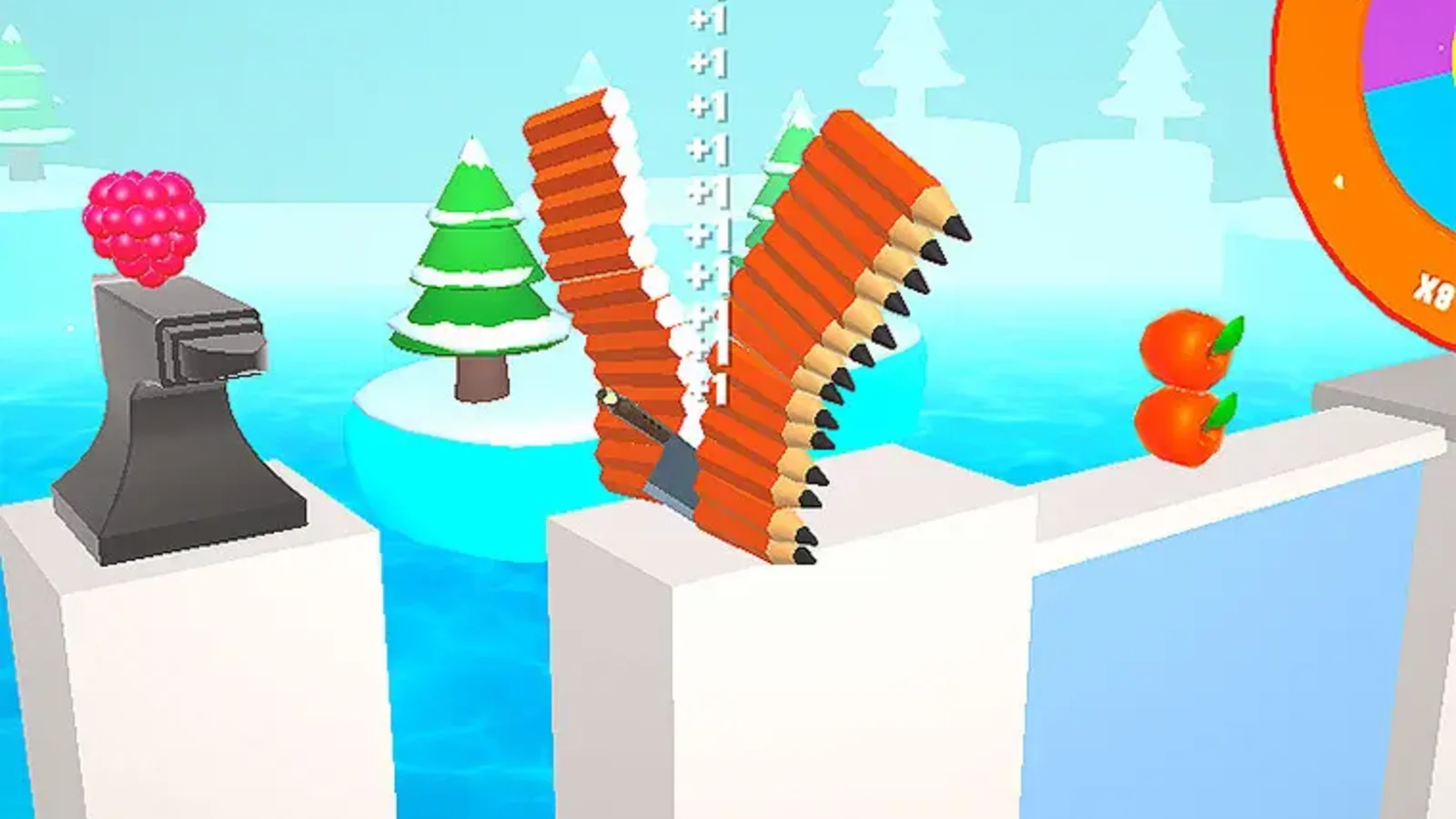
The first rule in Slicer Duo is to stop thinking in single jumps and start thinking in rhythm patterns. A clean run usually comes from matching the natural rise and fall of the knife to the spacing of objects ahead. In our testing, the players who lasted longest were not the ones mashing inputs. They were the ones making short, deliberate adjustments and reading two or three hazards in advance.
Use shallow taps whenever the stage starts mixing fruit with metal hazards. Spikes, anvils, and hammers punish overcorrections, so giant jumps usually create more problems than they solve. A small lift is often enough to clip the target you need while still leaving room to drop under the next trap. If you keep dying around the same section, look at where your momentum became too vertical. That is usually the real mistake.
Treat the end-of-level reward board like part of the run, not a cutscene after it. The dart-style target can swing your payout dramatically, and the bonus entrance matters because it unlocks extra coins, bars, and faster cosmetic progress. Do not rush the final throw after surviving a difficult stage. The multiplier zone is easiest when you carry the same calm timing you used through the level itself.
When the environment theme changes, assume the spacing logic may change too. The Spring, Ice, and Desert references suggest visual variety, but those swaps also help disguise new obstacle timing. Relearn the cadence at the start of each fresh theme instead of assuming the previous route logic still applies. A pattern that worked in one environment can become too slow or too aggressive in another.
In local two-player sessions, focus on consistency over hero plays. Shared-screen rounds become messy fast, and the winner is often the person who avoids the obvious blunder rather than the one chasing risky slices. Keep your own lane, trust quick taps more than long holds, and let the other player beat themselves if the screen gets crowded.
Slicer Duo Highlights
One-Button Flight Control
The knife only asks for rise and drop input, but that narrow control set creates a surprisingly expressive skill ceiling. Tiny timing differences completely change how you clear dense hazard lines.
Hazards That Demand Pattern Reading
Spikes, anvils, and swinging hammers are placed to punish panic inputs. The best runs come from understanding obstacle rhythm and keeping enough space for the next correction.
Bonus Targets and Multipliers
Finishing a stage opens a reward section where accurate landing creates high multipliers. Hitting the special bonus marker adds a second layer of coin farming and makes clean clears feel more meaningful.
Unlockable Knives and Theme Variety
Coin income is tied to visible rewards. New blades and changing environments keep the progression loop moving, even though the core mechanic stays intentionally simple.
Local Two-Player Chaos
Solo play highlights the rhythm game side, while local play turns the same layouts into a competitive survival contest. The shift in mood gives the game much more replay value than a single-mode arcade runner.
Slicer Duo FAQ
What is the best reason to aim for the bonus target in Slicer Duo?
The bonus target is the fastest way to turn a clean level clear into stronger progression. Extra coins and bars speed up blade unlocks and make later sessions feel more rewarding.
What mistake ends most runs?
Overcorrecting is the usual problem. Players often hold too long, gain too much height, and then fall into the next hazard because the knife has no room left for a controlled drop.
Do the environment themes change more than the visuals?
Yes. The themes help signal that stage pacing and obstacle spacing may shift, so they are useful cues for adjusting your timing instead of treating every section the same way.
How do you gain an edge in local two-player matches?
Play for stability. In shared-screen rounds, safe lines and repeatable taps outperform flashy recovery attempts because most losses come from one obvious collision, not from falling slightly behind.
Are new knives only cosmetic, or do they help motivation?
They mainly refresh the look and feel of the run, but that still matters. Cosmetic milestones give the reward loop a purpose and make improvement easier to feel across short sessions.